
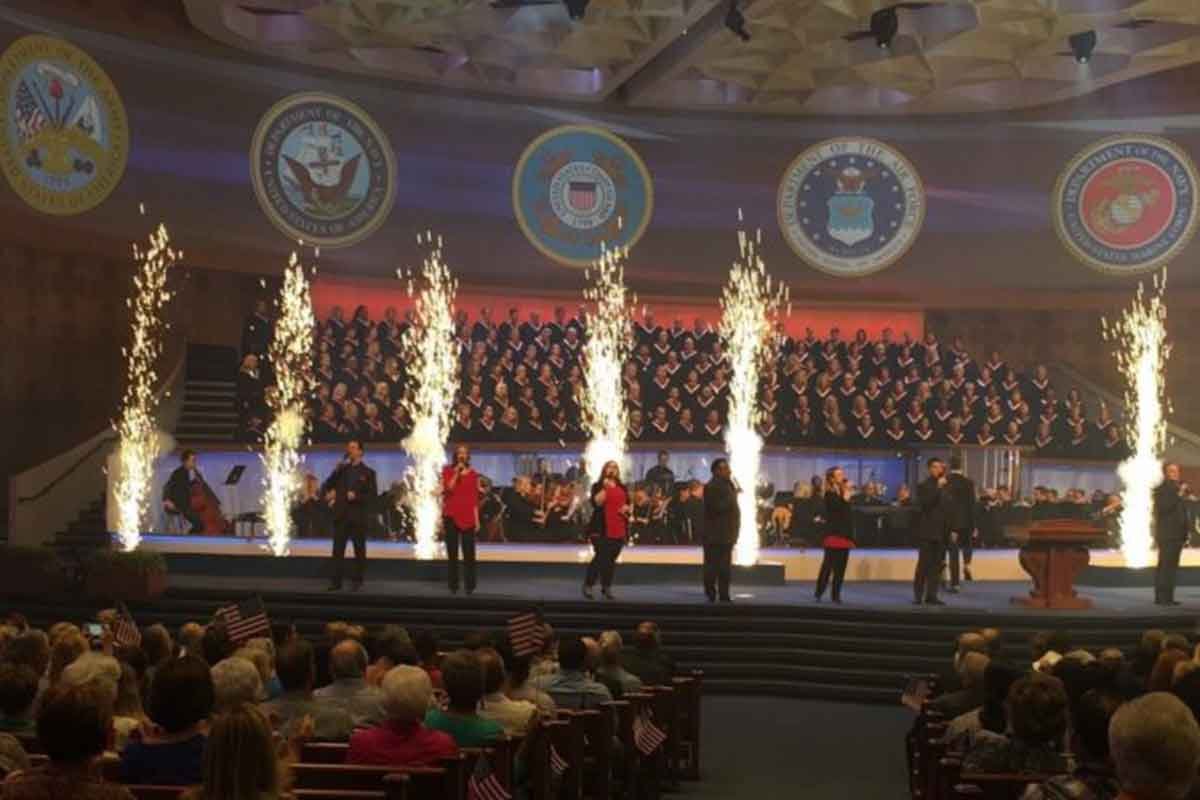
Several critics have denounced the “idolatry” of “Freedom Sunday” worship June 25 at First Baptist Church in Dallas, pastored by Robert Jeffress, who prominently campaigned for Donald Trump during last year’s election.
The critics include Messiah College historian John Fea, a United Methodist pastor, and a Presbyterian church music minister. Click their respective links to read their perspectives, each of which is unique, but all are agreed in accusing First Baptist of “idolatry” for venerating America on “Freedom Sunday” a week before July 4.
Watching the video of this service, I confess I cringed when fireworks were literally ignited on the church stage while the choir sang patriotic medleys. As a Methodist traditionalist, I am discomfited by movie screens in sanctuaries, much less the Broadway/Hollywood style of entertainment that seems to influence many megachurches. Personally I prefer liturgy, creeds, venerable hymns sung from hymnals, organ music, robed preachers behind pulpits, reverence and solemnity.
My own worship preferences likely place me in a minority among today’s active Protestants in America. And my worship preferences admittedly are mostly subjective, shaped by my upbringing. But I also think there’s a theological case for a form of worship that is in some continuity with the universal church across time and culture. Yet the megachurches whose flashy style is not my preference no doubt also proclaim the Gospel to millions who would not heed traditional worship.
Worship style for Protestants is debatable. The seriousness of idolatry is not. This allegation against First Baptist by several critics cited literal American flag waving by worshippers, patriotic music, including military service songs and the National Anthem’s first stanza, that don’t mention God, an armed military honor guard presenting the colors, and asking military veterans to stand during their respective service songs.