
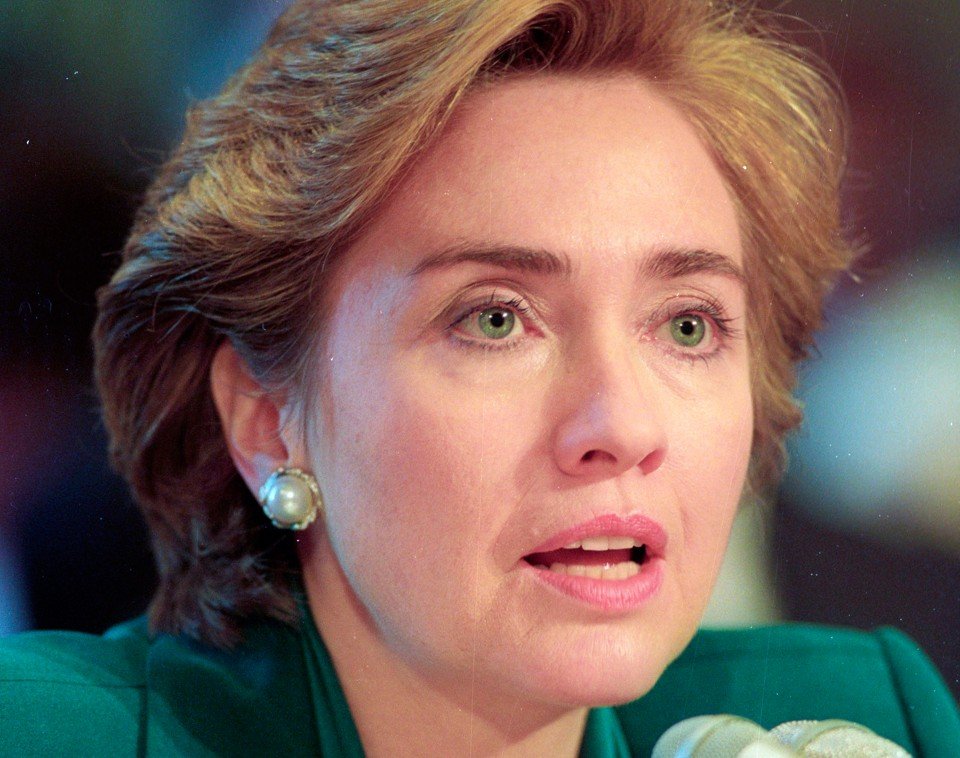
During the 2016 presidential campaign, Hillary Clinton has repeatedly spoken out in support of the right to abortion. Planned Parenthood president Cecile Richards has praised Clinton for treating reproductive issues as “more than just a sound bite” and the pro-choice organizations Emily’s List and NARAL Pro-Choice America have endorsed her. However, Clinton’s views on abortion are more nuanced and reflect her religious commitments to a greater degree than partisans on either side of the issue may realize.
Husband Bill has perhaps been a more reliable defender of legal abortion. Already pro-choice when he served as governor of Arkansas, he seemed troubled by the question of when life begins. He noted in his 2004 memoir that it is self-evident that biological life starts at conception. Even so, “No one knows,” he wrote, “when biology turns into humanity or, for the religious, when the soul enters the body.” Kengor reports that Bill sought the guidance of his then-minister, the Reverend W. O. Vaught, a conservative Baptist whose anti-abortion stance was well known. Vaught’s opposition, however, had been shaken by the real-life trials of parishioners faced with difficult pregnancies. Challenged by Bill to offer a definitive answer, Vaught turned to the Bible. Based on his reading of scripture, he concluded that not until God “breathes life” into a body does “personhood” start. Human life, then, begins at birth with the first breath, he said; while abortion may be morally suspect, it does not qualify as murder. For Bill, Vaught’s interpretation—which differs from the UMC’s—settled the issue.
Clinton has broadened the scope of standard pro-choice arguments by acknowledging that abortion can be an agonizing decision and that it “representsa sad, tragic choice to many, many women.” She has also acknowledged that it can lead to long-term feelings of guilt and regret, which the UMC calls “post-abortion stress”—after-effects rarely discussed by pro-choice activists. When women weigh whether to terminate a pregnancy, Clinton counsels them to “summon up what we believe is morally and ethically and spiritually correct and do the best we can with God’s guidance.” Once again, her religiously grounded advice tracks the UMC’s: “We call all Christians to a searching and prayerful inquiry into the sorts of conditions that may cause them to consider abortion. We entrust God to provide guidance, wisdom, and discernment.”